












5 Mistakes in Your Glasses That Add 10 Years (and the Secret Solution)
Glasses can change the balance of your face, but there is no frame colour or shape that automatically makes everyone look younger. A better choice is the pair that fits securely, places the lenses correctly and feels like your style. Age is not a design rule.
This guide replaces the usual “anti-ageing glasses” shortcuts with five practical checks you can use when choosing optical frames or sunglasses. They work whether you prefer bold black acetate, a delicate metal frame, a cat-eye, a round shape or something oversized.
Mistake 1: choosing by an age rule instead of by fit
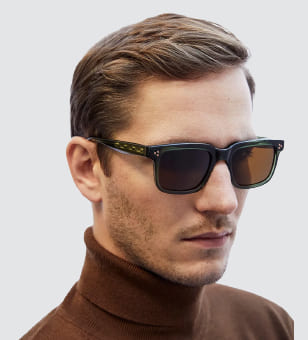
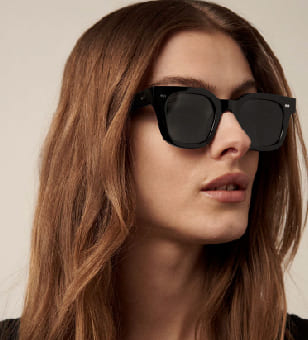
Advice such as “black frames add years” or “transparent frames always brighten the face” sounds simple, but it ignores the person wearing the glasses. A dark frame can create elegant definition; a clear frame can feel light; and either can look balanced when its size, shape and colour work with your features and personal style.
Start with preference, then check the fit. Try a few levels of contrast against your complexion, hair and wardrobe. Look at yourself from the front and side in natural light. The useful question is not “Does this make me look younger?” but “Do I feel comfortable and recognisably myself in this frame?”
Mistake 2: ignoring bridge and overall width
A frame that constantly slides, pinches the nose or presses at the temples will be distracting no matter how good it looks. The bridge should sit securely without painful pressure. The temples should reach the ears comfortably, and the frame should remain reasonably stable when you look down or move your head.
Check the three numbers usually printed inside the temple: lens width, bridge width and temple length. They are a useful starting point, not a universal guarantee, because two frames with similar numbers can fit differently. The College of Optometrists advises taking facial and frame measurements, fitting spectacles for the correct position and checking fit, comfort and function.
Mistake 3: treating frame shape as a guaranteed “lifting” effect
Cat-eye frames can create an upward visual line, but they are a style option, not an anti-ageing treatment. Round, rectangular, aviator and geometric frames can be equally flattering. What matters is the relationship between the frame, your brows, cheekbones, eyes and overall proportions.
From the front, check that your eyes sit in a sensible position within the lenses and that the frame does not feel dramatically too narrow or too wide. Make sure it does not rest on your cheeks when you smile. Brow alignment can influence the visual balance, but it does not need to follow one rigid formula. If you like a distinctive shape, let fit and comfort decide whether it works.
Mistake 4: assuming one colour or size is universally flattering
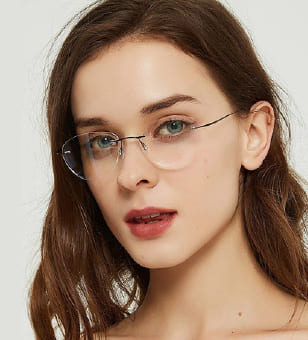
Colour changes contrast. Warm tortoiseshell, crystal, gold, silver, navy, red and black can all work beautifully, depending on the wearer and the effect they want. Instead of hiding lines or trying to “correct” a face, compare how each option relates to your skin tone, hair, eyes, clothing and personality.
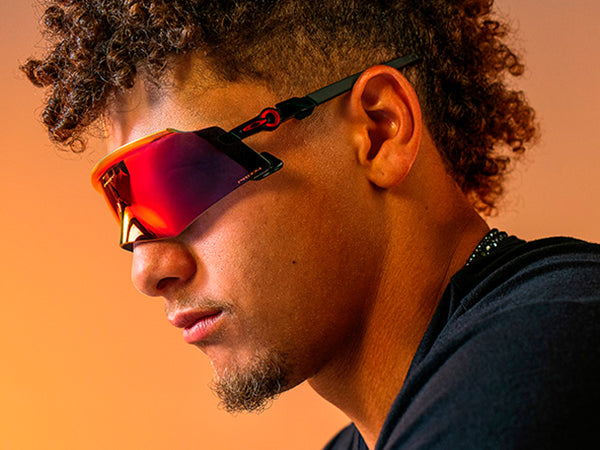
The same applies to size. Oversized frames can feel expressive and provide a generous field of view, but bigger is not automatically better. A large frame may touch the cheeks, feel heavy or be unsuitable for some prescriptions. A smaller frame can be refined and comfortable when it does not restrict the useful lens area. Frame size also affects the available lens area, so it should be checked against the prescription and lens design.
Mistake 5: choosing the frame before considering the lenses
Reading glasses are not “grandmother glasses”, and there is no need to hide the fact that you use vision correction. The important question is whether the frame supports your prescription and the way you use it. Progressive lenses, stronger prescriptions and task-specific lenses can each place different demands on lens depth, weight and centration.
If your vision has changed, a new frame alone will not solve the problem. The National Eye Institute explains that eye doctors can prescribe eyeglasses during a regular eye exam and that different refractive errors require different lenses. Ask an optician to check the prescription, measurements and final adjustment before relying on a new pair for daily use.
A practical five-minute try-on checklist
- Look straight ahead: are your eyes positioned comfortably within the lenses?
- Smile and move: does the frame stay stable without resting heavily on your cheeks?
- Check contact points: is there pinching at the bridge, temples or behind the ears?
- Compare in natural light: does the colour create the contrast you want?
- Think about use: will the frame accommodate your prescription, work and daily activities?
- Take your time: compare several shapes rather than accepting a rule based on age or face shape.
Choose the category, then narrow by real-world fit
Browse our optical frames when you need prescription eyewear, or compare our sunglasses for everyday sun protection and style. Product pages can help you shortlist shapes, colours and sizes, but professional fitting remains valuable when comfort, centration or prescription suitability is uncertain.
The best frame is personal, not “anti-ageing”
Good eyewear does not need to conceal age, wrinkles or character. It should help you see clearly, feel comfortable and express how you want to present yourself. Use style advice as inspiration, not as a restriction, and judge each frame on the person actually wearing it.
If you want help comparing sizes, frame shapes or prescription suitability, contact Gafas Canarias before ordering. Share your current frame measurements and how you plan to use the glasses so the recommendation can be more specific.
Read more

A balanced, evidence-based guide to blue-light glasses, digital eye strain, screen-comfort habits and choosing suitable lenses in the Canary Islands.

A practical 2026 guide to Ray-Ban Meta Gen 1 and Gen 2, Oakley Meta, battery life, video quality, fit, language availability and buying from the Canary Islands.