












Polarized vs Non-Polarized Glasses: Which Do You Really Need in the Canary Islands?

If you live in the Canary Islands or visit the islands frequently, you know perfectly well that the sun here is no joke.
But when you walk into an optician's shop and are faced with the classic question: "Polarized or non-polarized?", do you really know which one you need?
What are Polarized Glasses?
Polarized lenses have a special filter that blocks light reflected from horizontal surfaces such as water, road or sand.
How they work:
• Sunlight reflects off flat surfaces creating glare
• The polarized filter horizontally blocks these reflections
• Only lets vertical light pass through, reducing glare up to 99%
• The result: clearer vision, sharper colors and less eye strain
🌊 Advantages of Polarized Glasses in the Canary Islands
1. Protection in water sports
Whether you're surfing in El Cotillo, sailing along the coast of Tenerife or simply enjoying a day at the beach in Maspalomas, polarized glasses eliminate glare from the water, allowing you to see clearly below the surface.
2. Safer driving
The Canarian roads can be demanding, especially on coastal routes where the sun's reflection on the asphalt is intense.
3. Hiking and trail running
If you enjoy Teide, Anaga or the trails of La Palma, polarized lenses help you see the details of the terrain better, reducing eye strain during long walks.
4. Sport fishing
Fishermen are clear: polarized glasses are essential.

⚠️ When NOT to use Polarized Glasses
Although they may seem like the perfect option, there are situations where polarized glasses may not be ideal:
• LCD/LED screens: Some mobile phones, GPS and digital screens may appear dark or distorted
• Skiing on artificial snow: Polarized snow can make it difficult to detect ice patches.
• Airplane pilots: Instrument panels may become illegible
• Tight budget: They are more expensive than non-polarized ones
🔴 Non-Polarized Glasses: When Are They Enough?
Non-polarized sunglasses are still great for:
• Daily urban use in cities like Las Palmas or Santa Cruz
• Casual walks without intense exposure to reflective surfaces
• Those who spend a lot of time looking at screens outdoors
• Tighter budgets without sacrificing UV protection
Most importantly: make sure your glasses have UV400 protection, blocking 100% of UVA and UVB rays, regardless of whether they are polarized or not.

✅ Which one to choose for your lifestyle in the Canary Islands?
Choose POLARIZED glasses if:
✓ You practice water sports regularly
✓ You drive frequently, especially on coastal roads
✓ You go hiking or trail running
✓ You spend a lot of time at the beach or near water
✓ Sport fishing
✓ You are looking for maximum visual comfort
Choose NON-POLARIZED glasses if:
✓ Your use is mainly urban
✓ You frequently work with outdoor screens
✓ You have a more limited budget
✓ You do not regularly expose yourself to highly reflective surfaces
👉 Conclusion
In the Canary Islands, where the sun shines brightly almost all year round, both options are valid depending on your lifestyle.
If you live the Canarian lifestyle to the fullest (beach, sports, nature), polarized glasses are a worthwhile investment.
Still have doubts about which glasses to choose?
Read more
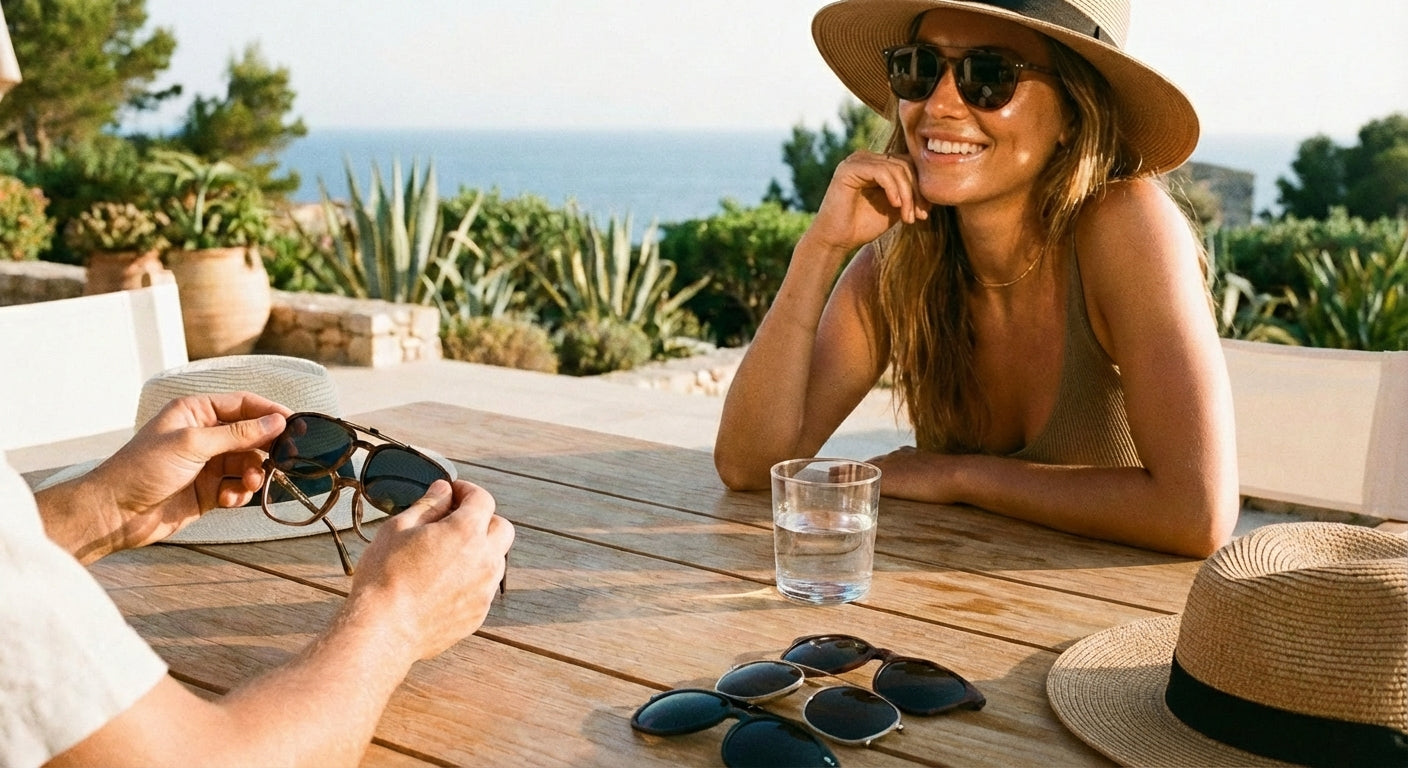
Does this sound familiar? You leave home with your prescription glasses, the Canary Islands sun is strong, and suddenly you realize: 'I left my sunglasses at home.' Or worse, you carry two pairs of...
Report • Trends 2026Glasses 2026: 5 Trends that make your current glasses (and your cell phone) seem like a thing of the past There is a difference between covering your eyes and improving the way ...